
Saratoga County City Directory Collections
Saratoga County historical directories are a shelf of overlapping runs, not one unbroken annual series. The New York State Library holdings list identifies film for Saratoga Springs, a pair of county directories, and several telephone-book years. The Saratoga Room describes local directory holdings beginning in 1868, while the preservation guide identifies selected Boyd’s volumes. Use the stated run for the source in hand. A volume can place a person at an address and name an occupation, but its absence may reflect a publication gap, a spelling change, a seasonal stay, or a choice not to list.
| Collection | Years | Where Held | Access |
|---|---|---|---|
| Boyd’s Saratoga Springs Directory | 1868–69; 1872–73; 1874–75; 1876–77 identified | Ancestry directory images; library alternatives | Image collection and physical research alternatives |
| Saratoga Springs historical directory run | Local holdings from 1868; film for 1872–1944 and 1946 | Saratoga Room and New York State Library | Room research and microfilm |
| Saratoga County Directory | 1870/71 and 1890 | New York State Library | Microfilm |
| Saratoga Springs telephone books | 1922; 1940–42; 1945–47; 1949–50 | New York State Library | Film or fiche holdings |
| Reverse or criss-cross material | Exact local run not located | Saratoga Room catalog and staff | Confirm a volume before relying on it |
Do not turn the phrase “from 1868” into a promise that every year survives. The local sources support a long run and selected digital volumes, but they do not document every publisher and year as a continuous series. The Saratoga Room, the State Library, and library staff are the practical fallback when a year is missing from a web collection.
Saratoga Room Directory Shelf
The Saratoga Room at Saratoga Springs Public Library is the strongest public counter for a Saratoga County directory question. Its holdings extend beyond printed books to photographs, postcards, maps, clippings, manuscripts, personal papers, organization papers, rare local works, and reference files. That mix matters when a directory gives only initials or an old street form. Staff availability follows special hours, and the library asks visitors to call ahead. Bring the name, a likely date range, and any address variant, then ask whether a directory, newspaper, map, or vertical file is the best next source.
The Saratoga Room collection description shows the local-history setting for Saratoga County directory research.
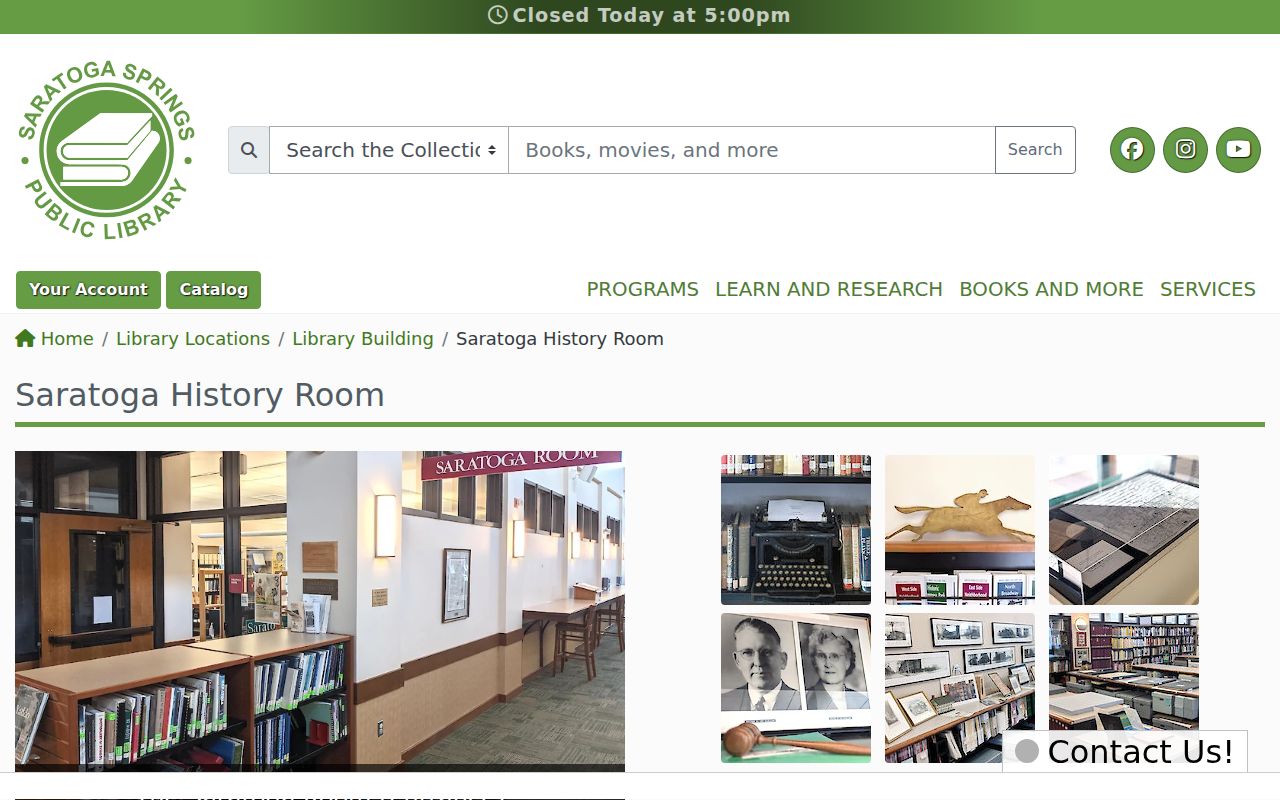
Call-ahead research is useful here because a directory entry often needs a nearby map, a Saratogian notice, or a surname file to identify the right household. This is a human-use advantage of the room, not a claim that its shelves list every county resident.
For countywide work outside Saratoga Springs, identify the town or village first. The County Historian, town historians, and local clerks can hold the relevant original or finding aid. The library is a research source; a certified civil or vital record must still come from its legal custodian.
Note: The Saratoga Room requests a call ahead because its special local-history hours can change.
Saratoga County Directory Film and Digital Leads
Film remains important because the State Library’s Saratoga runs are explicitly identified by year. Start with the State Library directory listing to determine whether a volume is for a city, the county, or telephone subscribers. A telephone listing is a lead, not a complete resident roll. The Saratoga Room’s local-history resources also point to New York Heritage, DPLA access through New York Heritage, catalog finding aids, and digital exhibits. Those routes can add an image, a street view, or a local organization record around the printed name.
New York State Library’s Saratoga directory holdings document the film-based side of Saratoga County directory research.
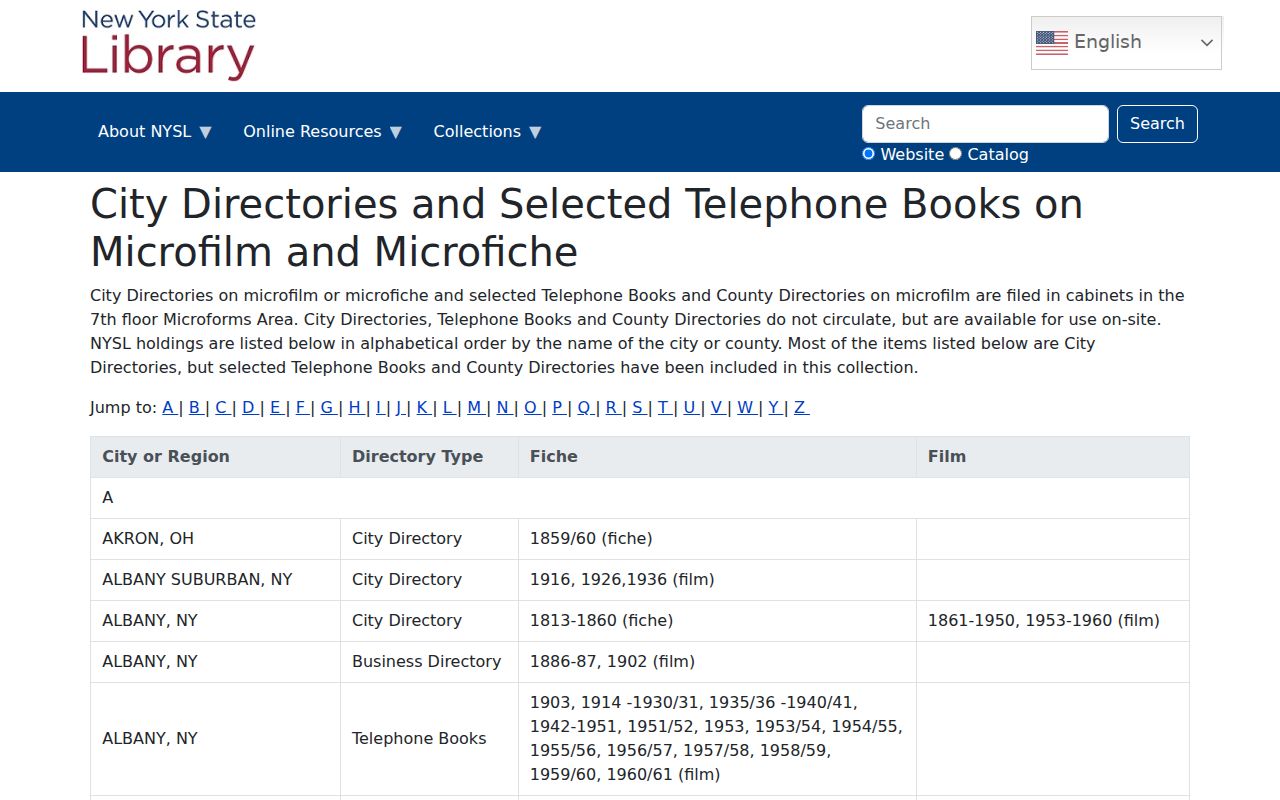
The holdings list makes gaps visible before a trip or request. It also prevents a researcher from assuming that a Saratoga Springs volume is automatically a countywide source.
Saratoga Room Digital Exhibits provide another local-history path for interpreting a name or address once the printed entry has been copied exactly.
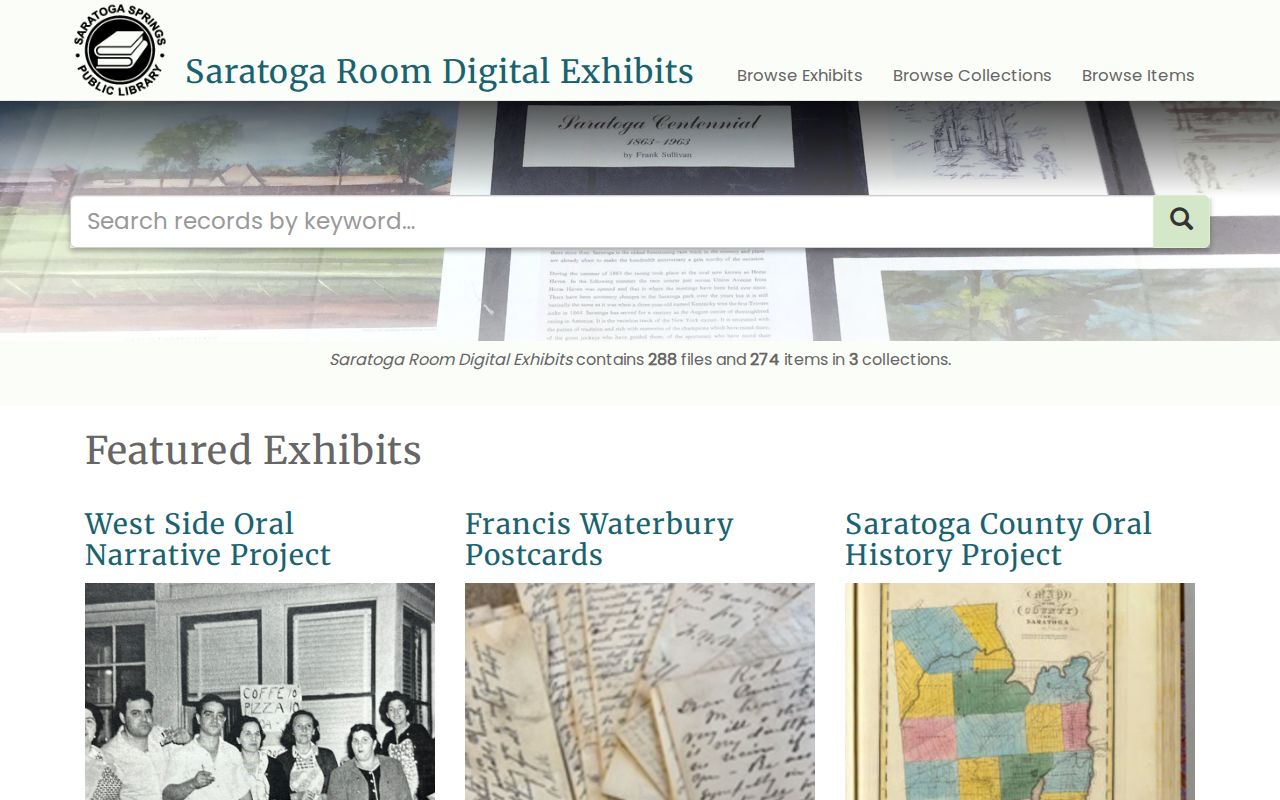
Digital exhibits are supporting context rather than a substitute for a directory page. Keep the volume year and page reference with every image or clipping used in a family file.
Reading a Saratoga County City Directory Entry
Copy a Saratoga County city directory entry as printed before expanding any abbreviation. The documented structure can include a surname or household name, given name or initials, a spouse or household relationship when printed, occupation, employer or business, and a street address. Some volumes also have resident, business, or street sections. The 1905 example noted by the County Historian identifies women as nurses, which confirms that occupation evidence appears in at least one local run. Punctuation, widow marks, and owner or renter symbols were not verified as universal local fields, so read the abbreviation key in the specific volume.
| Directory element | What to record |
|---|---|
| Household or surname | The indexed name, initials, and any relationship wording printed in that volume. |
| Occupation or business | A work or business clue that can distinguish people with the same name. |
| Street address | The historical number and street spelling, including a unit if printed. |
| Resident or business section | The section where the name appears, useful when a person also operated a shop. |
| Street section | An address-oriented section when the volume supplies one; confirm it exists first. |
- Criss-cross directory
- An address-ordered directory that may lead from a street number to a listed occupant. Saratoga’s exact local run was not located, so confirm the year with library staff.
- Householder index
- An alphabetical finding tool for the listed household or principal name, rather than proof of every person at an address.
- Abbreviation key
- The publisher’s explanation of initials and symbols, usually near the front of that volume. Photograph or transcribe it before interpreting a mark.
One address can hold a hotel, boarding house, shop, or seasonal business. A directory entry therefore supports a date-specific connection, not a claim of ownership or current occupancy.
Saratoga County Directory News and Maps
When the entry is thin, pair it with the Saratoga Room’s local-history resources, especially the Saratogian microfilm described as beginning in 1856. Notices and obituaries can help distinguish a move, a death, a business change, or two residents with the same initials. They are leads, not a replacement for the underlying directory record. The 1895 Library of Congress Sanborn set has 30 sheets and 31 images for Saratoga, offering building footprints, materials, uses, and street context around an entry.
Maps locate a structure at a point in time; they do not automatically name every occupant. Historic-district streets around Union Avenue, Eastside, Congress Park, Hillside, Broadway, North Broadway, and Franklin Square can also help align an old street description with the current grid. For a directory address that no longer reads plainly, compare nearby cross streets, map context, and the later parcel description.
Tracing Saratoga County Directories Through Families
Use a small year-by-year grid rather than a single impressive-looking entry. Begin with the one volume that gives a reliable name or address. Record the exact spelling, street, occupation, household note, volume year, and page. Search the nearest available volume on either side, then follow the address even if the surname changes. This method handles a widow, an adult child, a boarder, or a successor at the same shop without treating them as one person. A result that disappears may mean a move, death, omission, or changed spelling.
- Find the first verified Saratoga County directory entry and copy its page details exactly.
- Check the closest earlier and later available volumes, noting spelling, address, and occupation changes.
- Check a street section only when the particular volume contains one, then record nearby listed names as context.
- Pair the run with federal census years 1860, 1870, 1880, 1900, 1910, 1920, and 1930, plus New York censuses for 1855, 1865, 1875, 1892, 1905, 1915, and 1925 where available.
- Use the County Clerk Infodex town-code and page method, then close an uncertain trail with a newspaper, cemetery, probate, or civil-record lead.
The County Clerk Infodex covers Saratoga County census volumes from 1850 through 1925 through year-specific town codes and page browsing. The Historian’s microfilm list adds federal and New York census material, but the general loss of the federal 1890 census means local holdings should be checked before treating it as an ordinary full schedule.
Note: Record the source volume and page with each address because similar names and village labels recur across Saratoga County.
Saratoga County Directory Boundaries After 1915
A directory heading can describe Saratoga Springs, the Town of Saratoga, village-era material, or the wider county. That distinction is especially important after Saratoga Springs’ village and town consolidated as a city in 1915. The change did not erase older municipal labels from sources. It means that an address, town name, and street number should be checked against the date of the record rather than normalized to a modern mailing name.
| Year or run | Documented Saratoga directory context |
|---|---|
| 1791 | Saratoga County formed from Albany County, and County Clerk land and local court material begins in the county’s record description. |
| 1868 | Saratoga Room references identify the start of its local directory holdings. |
| 1870/71 and 1890 | County directory volumes documented on New York State Library film. |
| 1872–1944 and 1946 | Saratoga Springs directory film documented by the New York State Library. |
| 1915 | Saratoga Springs village and town consolidated as a city, changing municipal labels in later research. |
This geography is a useful safeguard for family history. A surname indexed under a village or town should not be discarded simply because a later record uses Saratoga Springs or a different postal locality.
Saratoga County Directory Research Network
Several institutions hold different parts of the historical trail. The County Historian maintains census, naturalization, cemetery, family, map, and early-town resources, and research is by appointment. Brookside Museum’s Saratoga County History Center has community files on buildings, architecture, organizations, religion, maps, and scrapbooks; search PastPerfect first and view materials by appointment. The Saratoga Springs History Museum’s Bolster collection adds building, business, school, yearbook, and people images, also by appointment.
For a present-day parcel or a long deed chain, historical directories should hand off to the county’s records custodian and modern property tools, not be stretched beyond their date. The address-keyed route is covered on the Saratoga County street directory. For a directory name that needs a current, lawful verification, compare independent official records and respect protected addresses and confidential records.
Lawful Saratoga County Directory Use
Historical lists are best used for genealogy, reconnecting with family history, local history, estate questions, and understanding a building or neighborhood over time. A printed entry can be wrong, incomplete, or limited to the people and businesses a publisher chose to include. Never use an old address to stalk, harass, threaten, or contact someone against their wishes. New York address-confidentiality protections, sealed records, and later custody rules can properly leave a person out of public results.